Biographies
Alex Bein
The historian Alex Bein (1903–1988) was trained at the Reich Archives in Potsdam. In 1933, he emigrated to Palestine, where he helped establish the Zionist Central Archives beginning in 1936. In 1955, he became its director; in 1936, he was appointed Israel’s first Chief State Archivist, a position that also gave him oversight of the Jewish Historical General Archives. To this day, he is regarded as one of the leading historians of Zionism. His estate library is housed at the Moses Mendelssohn Center in Potsdam.
Daniel J. Cohen
Daniel J. Cohen (1921–1989) was born in Hamburg; he emigrated to Palestine in 1935 and studied there to become a historian and archivist; in 1957, he became director of the Jewish Historical General Archives.
Heinz Moshe Graupe
Heinz Moshe Graupe (1906–1997) was born on April 22, 1906, in Berlin, the son of Paul and Dora (née Melchiker) Graupe. He studied philosophy, history, and Semitic languages in Freiburg, Hamburg, and Berlin, earning his doctorate in 1930. In 1926, he also began studying at the College for the Study of Judaism [Hochschule für Wissenschaft des Judentums] in Berlin, where he passed the rabbinical examination in 1932. He received additional training in Jewish studies in 1930–31 at the Hebrew University of Jerusalem. In April 1933, Graupe emigrated to Palestine, where he initially worked as a private tutor and later as secretary at the secular Jewish court of arbitration of the Haifa Jewish Congregation until its dissolution following the establishment of the State of Israel. He was subsequently employed by the Haifa municipal administration as a secretary and archivist. In 1961, he resumed his academic work. In 1964, Graupe became the first director of the newly founded Institute for the History of the German Jews, which was to open in 1966, and thus also a lecturer in the history and intellectual history of German Jews at the University of Hamburg. In Hamburg, where he lived with his wife and his son, he was also active on the cultural committee of the Jewish congregation and as a member of the Joseph Carlebach Lodge in the B’nai B’rith Order. Graupe spent his retirement with his son in Chicago.
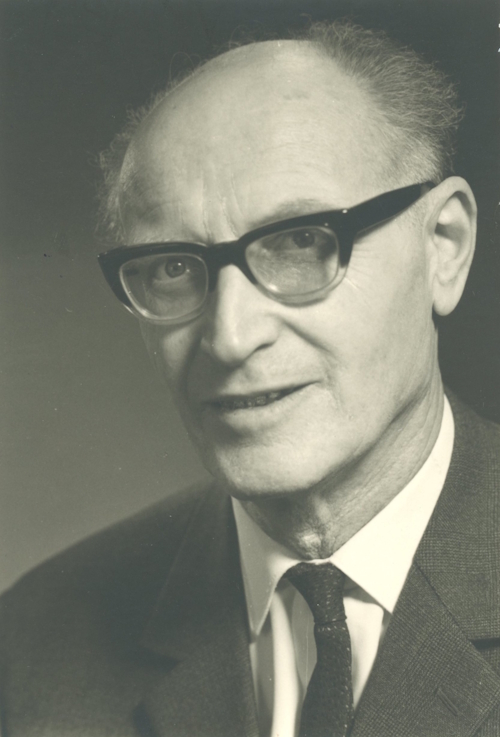
Heinz Moshe Graupe, IGdJ Archive, 13-093.
Hans W. Hertz
Hans W. Hertz came from an upper-class family in Hamburg. His father, Wilhelm Hertz, was Hamburg’s first juvenile court judge and director of the Youth Welfare Office from 1923 to 1933. Hans W. Hertz studied law and history in Heidelberg, Munich, and Hamburg, passing his first state law examination in 1926. Following his second exam, he began his probationary period as an assessor in the Hamburg civil service, working primarily in the State Archives. Although Hertz was considered a “full-blooded Aryan” under the Law for the Restoration of the Professional Civil Service, he was denounced in 1933 because of his Jewish great-grandfather Adolph Jacob Hertz and subsequently dismissed.1
In 1934, he registered as a lawyer, specializing in proving ancestry; his application for admission as a notary was initially rejected due to his unlawful classification as a non-Aryan. In 1940, due to a shortage of staff, he was able to obtain admission as an assistant judge at the district court, but was dismissed from that position in 1943 on the grounds of alleged “unreliability.” Hertz was licensed as an independent notary beginning in 1946. At the same time, he worked for the State Archives. Hertz had developed an interest in the preservation of cultural heritage early on. He joined the Society for Hamburg History while still a student. Between 1934 and 1941, he was involved in the clearing, transfer and preservation of gravestones from several (Jewish) cemeteries. In 1939 Hertz, together with the chairman of the Jewish Religious Organization, Max Plaut, and Leo Lippmann, launched an initiative to photographically document the Altona cemetery and, for this purpose, he also cooperated with the Reich Institute for the History of New Germany and its project “Securing the Historical and Anthropological Material of Jewish Cemeteries in Germany,” which was also supported by the SS.2
Beginning in the winter of 1943, he was also involved in securing valuable cultural assets from private ownership and public institutions. His role in transferring the Jewish congregation archives to the Hamburg State Archives – a matter that has been controversially discussed and evaluated by researchers – is likely connected to this context.3 After the war, Hertz was responsible at the State Archives for organizing the holdings of the Jewish congregations. In addition, appointed to the State Expert Committee for Archival Materials in 1958, he was involved in the founding of the IGdJ, serving on its board of trustees from the outset, and he held the chairmanship of the Monument Council beginning in 1971. He also served on the board and advisory board of the Patriotic Society. In 1984, he was awarded an honorary doctorate from the University of Hamburg for his services toward the preservation and care of cultural heritage.
Jacob Jacobson
Jacob Jacobson (1888–1968) was a historian and served as director of the General Archive of German Jews in Berlin from 1920 to 1939. In May 1943, he was deported to Theresienstadt, where he was liberated by the Red Army on May 8, 1945. He emigrated to London and became involved in the Leo Baeck Institute, founded in 1957.
Leo Lippmann
Max Plaut
Fritz M. Warburg
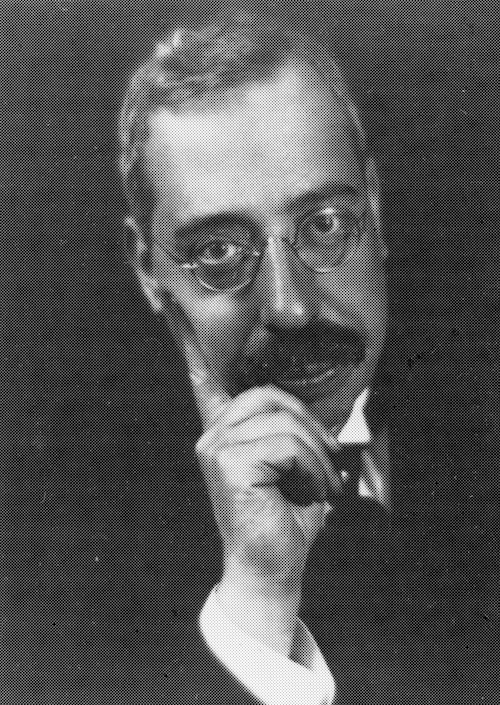
Fritz M. Warburg, StaHH / IGdJ picture database, PER00336.
Bibliography
- Zimmermann, Gunnar, “Hertz, Hans Wilhelm,“ in: Hamburgische Biografie, vol. 6, pp. 125–127.
Footnotes
- Gunnar Zimmermann, “Hertz, Hans Wilhelm,“ in: Hamburgische Biografie, vol. 6, pp. 125–127, here: p. 125. ↑
- Gunnar Zimmermann, “Hertz, Hans Wilhelm,“ in: Hamburgische Biografie, vol. 6, pp. 125–127, here: p. 126. ↑
- Gunnar Zimmermann, “Hertz, Hans Wilhelm,“ in: Hamburgische Biografie, vol. 6, pp. 125–127, here: p. 126. ↑